
ACSA is member-based incorporated association that seeks to advance citizen science through the sharing of knowledge, collaboration, capacity building and advocacy.
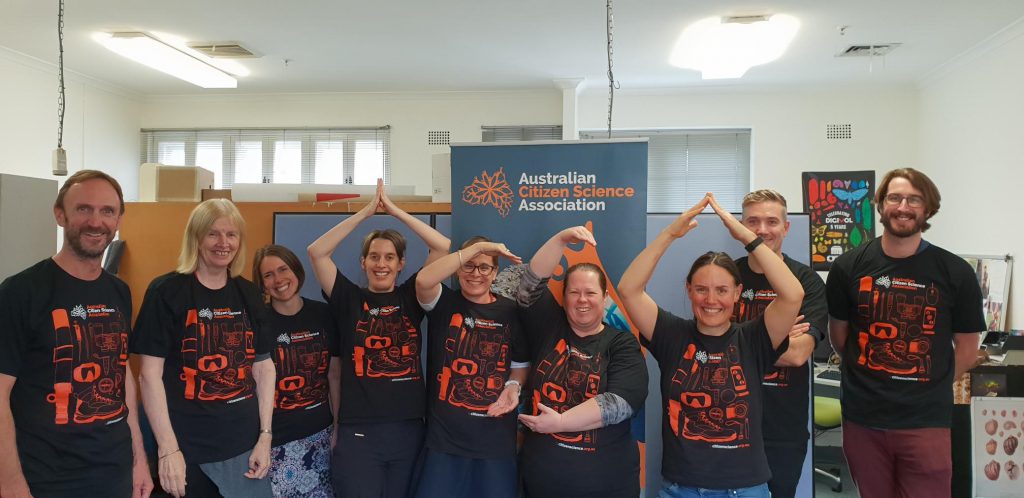
The Australian Citizen Science Association (ACSA) was first conceived in 2014 when a large number of dedicated volunteers came together to discuss how to increase awareness and support of Australian citizen science both nationally and globally.
Our Vision
A community that supports, develops and informs citizen science.
Our Mission
To advance citizen science through sharing of knowledge, collaboration, capacity building and advocacy for citizen science.
Our Goals
The Australian Citizen Science Association actively works to:
- Encourage and promote broad and meaningful participation in citizen science.
- Facilitate inclusive and collaborative partnerships.
- Support the development of tools and resources that further best practices.
- Ensure the value and impact of citizen science and its outputs are realised.
- Establish ACSA as an effective, trusted and well-recognised organisation and hub for citizen science in Australia.
What is citizen science?
Citizen science is the collection and analysis of scientific data in relation to the natural world, performed predominantly by citizens, usually in collaboration with scientists and field experts. Citizen scientists work with scientists or the scientific framework to achieve scientific goals.
ACSA’s official definition of citizen science is “citizen science involves public participation and collaboration in scientific research with the aim to increase scientific knowledge”.
It’s a great way to harness community skills and passion to fuel the capacity of science to answer our questions about the world and how it works. Have a look at our 10 Principles of Citizen Science to find out more.
The ACSA Team
ACSA is supported by a Management Committee, a patron, and broader volunteers. The Management Committee is member-elected and is comprised of a Chair, Vice-Chair, Secretary, Treasurer, and General Members that include Chapter Chairs. Committee members are elected by members at ACSA’s Annual General Meeting for a two-year term. Broader national volunteers are appointed by the Management Comittee to support the ACSA strategic goals.
Collectively, our broader membership includes people with extensive knowledge, across a range of sectors that intersect with citizen science. Areas of expertise include, for example, diverse natural and social science disciplines; environmental conservation; community mobilisation; strategic and implementation planning; business; technology design; communication; education and more. Likewise, our members have experience working with and within community groups; government at local, state, national and international levels; industry; not-for-profits; academia; consultancies; and as sole traders. Several of our members also have practice developing citizen science partnerships, leading community-driven groups, and facilitating national projects. The ACSA Management Committee regularly calls upon members with such expertise to support consultations on behalf of the Association.
If you are interested in joining the Management Committee, make sure you join ACSA as a Member and stay tuned for calls for nominations via our Newsletter.
ACSA Management Committee

Stephanie von Gavel
Chair, ACT
Stephanie von Gavel has over 25 years of experience in technology transfer, intellectual property, business and strategy development, and stakeholder engagement in a range of sectors – from biotechnology, agriculture, biodiversity, information management, international research for development, government engagement and inclusive innovation in an Indigenous science context. Stephanie has a Science/Law degree and previously worked in the agribusiness sector and for over 18 years with CSIRO – now retired she is enjoying various creative endeavours.
Stephanie was involved in the set up of ACSA in 2014 and was previously vice-chair and is now its Chair from October 2025. Stephanie’s interest in citizen science ranges from being an avid iNaturalist user to wanting to support ACSA in its mission to advance citizen in Australia and beyond – especially in understanding its impact, expanding the visibility of the diversity of citizen science, and creating a network of networks to share and grow the capacity of citizen science.
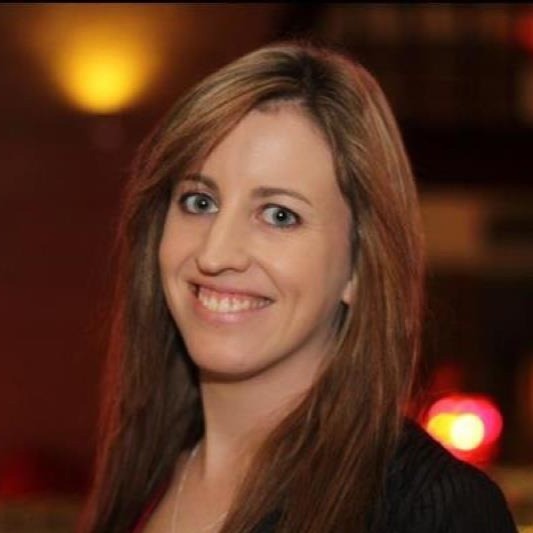
Bridie Schultz
Vice Chair, QLD
Dr. Bridie Schultz is a co-founder of Sativus Pty Ltd and holds a PhD in Genetics and Conservation, and a Masters of Science Education. Through Sativus, Bridie works with research corporations, universities, schools, and private enterprises to enhance the accessibility of information generated from scientific research. She is passionate about the effective application of research outcomes and lives by the principle that knowledge is only useful if it is shared; scientists spend valuable investment on solving worldwide problems and it is important for the wider community to be informed and involved. Bridie empowers researchers, teachers, students, and communities with the skills to create, conduct and communicate impactful science.

Alice Howe
Treasurer, NSW
Alice Howe PhD GAICD FIEAust CPEng EngExec
Alice is an environmental engineer with over 25 years’ experience in government, not-for-profit, academic and private sector contexts. Alice is currently a conjoint academic at the University of Newcastle, company secretary of Honey Eaters Pty Ltd, director of disability service provider, Tulgeen, a member of Engineers Australia’s Accreditation Board, and member of the Australian Citizen Science Association’s management committee.
vacant
Secretary

Sylvia Clarke
Chapter Chair for SA
Sylvia has worked with the Murraylands and Riverland Landscape Board since 2015. As the Seniro Project
Officer for Citizen Science and Community Engagement she manages a range of citizen science and volunteer
programs that are designed to connect the local community to nature and the management of regional
waterways and landscapes while generating important data sets. We share knowledge, educate, collaborate,
and build capacity to enable more people to become active citizen scientists, and engage with others beyond our
region. Current citizen science projects include; Waterwatch and Waterbug Bioblitzes, Frogwatch SA, iSPYthon,
Soil Your Undies, Find Our Fungi and 1 Million Turtles/ the TURTLE Project. Sylvia also co-manages the Marne
Saunders Report Card Project which for the first time brings together citizen science, government data, First
Nations cultural knowledge and local photos and stories to paint a picture of the current state of health of these
catchments, connect stakeholder and inspire action. Sylvia has a background in ecology, community
engagement and science communication, and is current chair of the SA Chapter of Australian Citizen Science
Association.
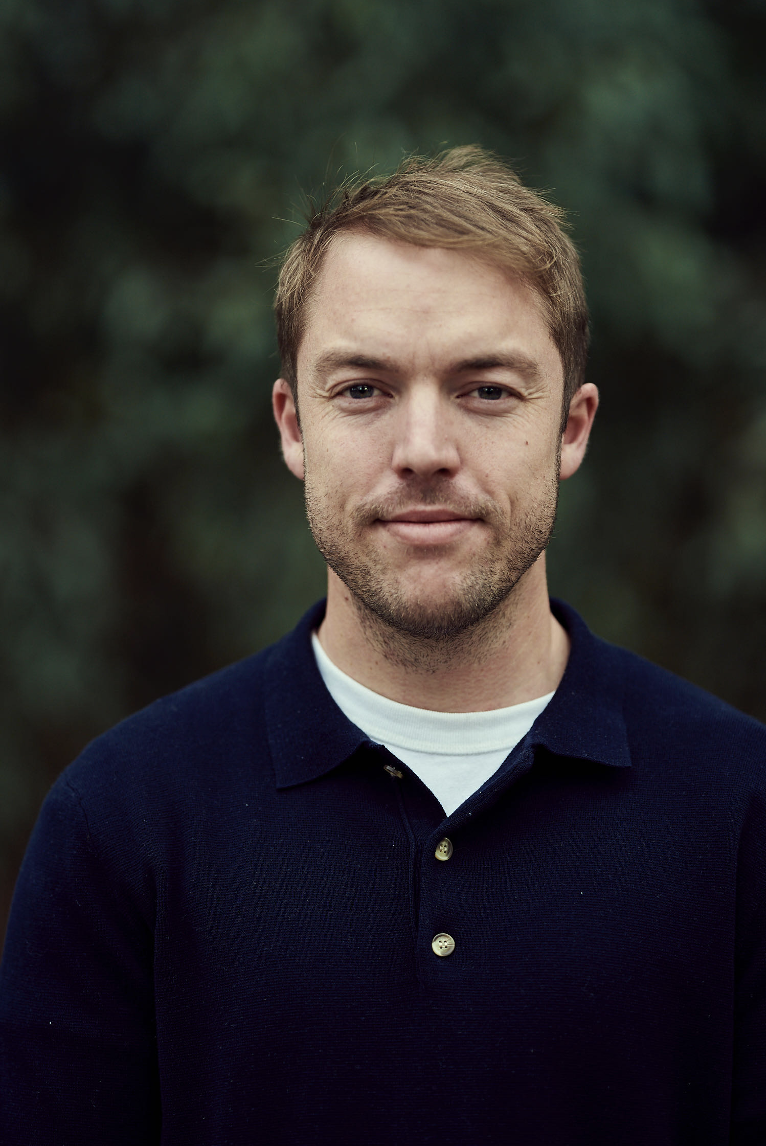
Pat Bonney
Chapter Chair for VIC
Pat Bonney is a citizen science researcher and practitioner, based at RMIT University. With a PhD in environmental management, his research examines the possibilities of citizen science to strengthen connections with waterway management and policy. Since 2017, Pat has served as a general member of the Australian Citizen Science Association Victoria Chapter and member of the ACSA Early and Mid-Career Researcher Working Group. Pat is working with DELWP and the Corangamite CMA to develop a new strategic direction for the Victorian Waterwatch program. He also co-facilitates a community-led citizen science program in East Gippsland, Living Bung Yarnda, which aims at elevating place-based knowledge and concerns for improved environmental management.
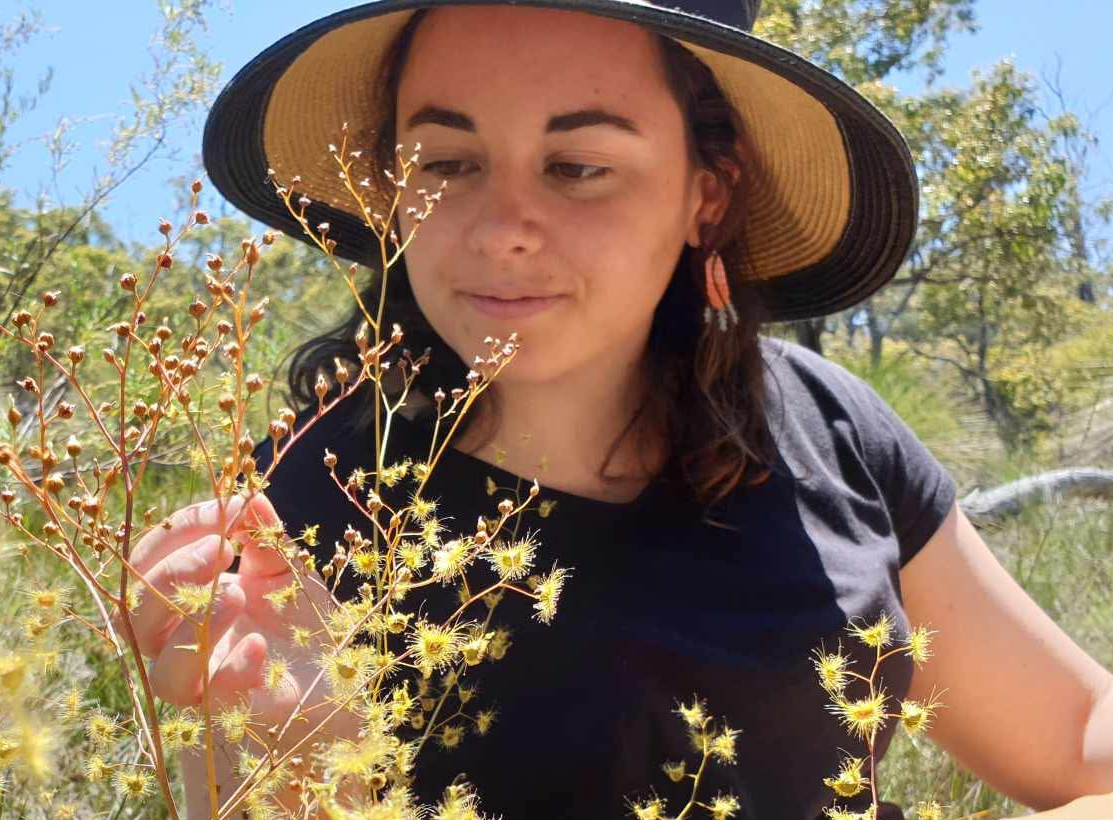
Laura Skates
Chapter Chair for WA
Dr Laura Skates is an Associate Lecturer at the University of Western Australia teaching into the Science
Communication discipline including SCOM5309 Citizen Science. Laura has a background in botany and over a decade of experience in environmental education and science communication. She completed her PhD on carnivorous plant ecology, an Australian Postgraduate Research Internship on science communication at botanic gardens, and co-led the Turning Gardeners into Conservationists citizen science project with Perth NRM and UWA. Laura lives and works in the beautiful green city of Perth, Western Australia, on Whadjuk Noongar country.
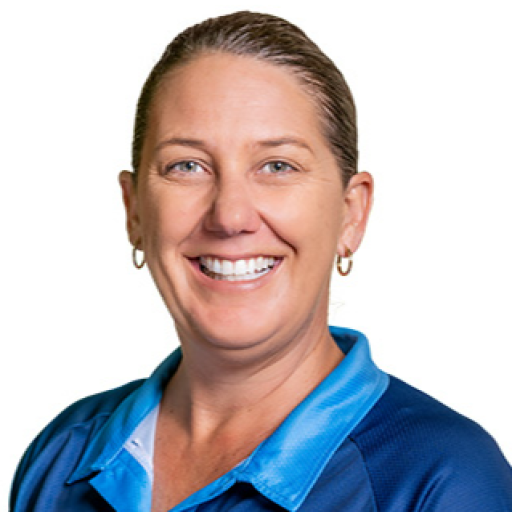
Linda Pfeiffer
Chapter Chair for QLD
Dr Linda Pfeiffer is Associate Professor and Deputy Dean (Research) in the School of Education and the Arts, CQUniversity based at the Gladstone Marina campus. Linda works to proactively address the national (and international) anticipated shortage of STEM skills for future employment for the benefit of the local regional community. She works in teams to deliver academically rigorous research undertaken in a state-of-the-art STEM Education facility around the associated programs developed to upskill teachers, inspire school students, and engage the whole of the community including industry and First nations people in a future fueled by STEM knowledge
diverse array of educational projects.
Linda has a passion for STEM education and engagement, including citizen science programs.
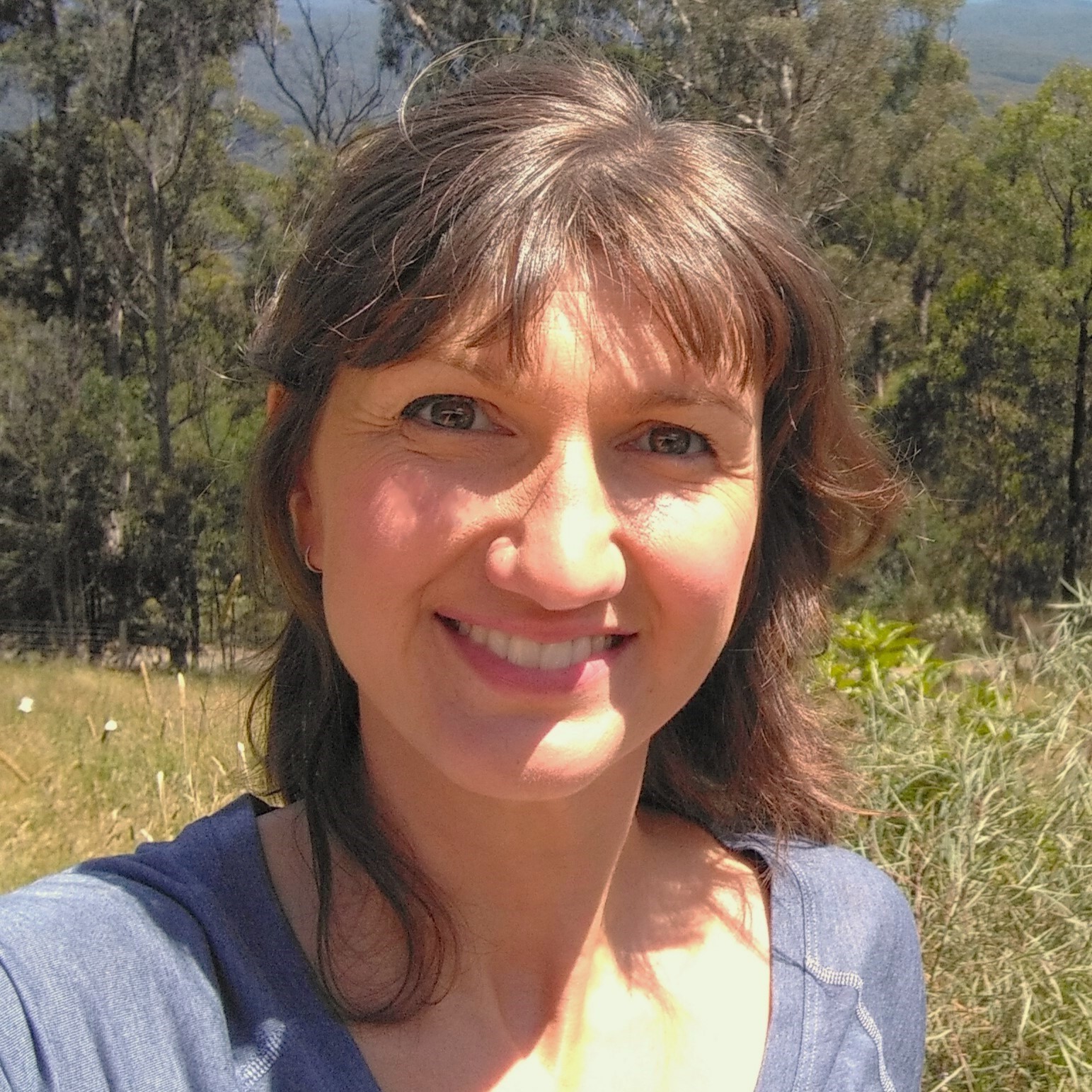
Lynette Plenderleith
Chapter Chair for NSW
Lynette is a Biodiversity Engagement Specialist in Local Government. She has previously designed citizen science programs and facilitated participantion. She has a PhD in frog ecology from Monash University and a Masters degree in salamander ecology from Towson University in the US. Lynette moved from academia to science communication, mostly working in television and film. She founded the community interest group Frogs Victoria, was the organisation’s first Chair, and now manages communications for them. Originally from the UK, Lynette moved to Australia for its wildlife and she spends her weekends hiking, snorkelling and birdwatching.

Daniel Harris-Pascal
Chapter Chair for ACT

Michelle Neil
General Member, QLD
In 2011 Michelle’s young son presented her with a spider. A redback spider. After convincing her son not to pick up spiders but to take pictures of them instead Michelle soon found she had over 7000 photos of all sorts of creatures and no idea what any of them were called. Thus a citizen scientist is made. In May 2014, Michelle was invited by Earthwatch to attend the inaugural Australian Citizen Science Association workshop in Brisbane. She found herself co-chair of the Communications Working Group. Michelle and Jessie Oliver co-developed ACSA social media (Twitter, Facebook, & LinkedIn). Since then Michelle, with her orange-coloured iPad clutched firmly in one hand, has been an active social media moderator, poster and tweeter for the ACSA social media platforms. Having worked in analytical chemistry for over a decade Michelle finds herself in an interesting place – a scientist as well as a citizen scientist, with a passion for science communication.

Prof Steve Turton
General Member, QLD
Dr Steve Turton grew up in Southern Africa and New Zealand and has lived in Australia for 40 years. He holds a BSc and MSc in Geography from the University of Canterbury and a PhD in Environmental Science from James Cook University. Currently a climate change specialist and adjunct professor at Central Queensland University, he previously held senior academic and leadership roles at James Cook University (1984–2016) and the
Rainforest Cooperative Research Centre. Dr Turton is a past president of the Australian Council of Environmental Deans and Directors, the Institute of Australian Geographers, and past chair of the National Committee for Geographical Sciences. He served as an expert reviewer for the IPCC’s Fifth and Sixth Assessment Reports and is a Distinguished Fellow of the Institute of Australian Geographers and recipient of the Royal Geographical Society of Queensland’s J.P. Thomson Medal. He has authored over 140 publications on rainforest ecology, environmental geography, and climate change adaptation.

Lisa Evans
General Member, New Zealand
Lisa originally studied Astronomy, then moved into a career in 3D animation and game development. After years working as a technical artist, Lisa became interested in “serious games” – games that have other goals than just entertainment. She completed a PhD about engaging the public in climate change using games, and has also worked on a number of serious games projects as a tech artist, designer and mentor. Her research focus is on the design and evaluation of digital projects with real, measurable impacts on audiences.
Lisa is interested in citizen science as a means of directly engaging the public in science, and creating online platforms that empower citizen scientists. From 2017-2021 she coordinated the astronomy citizen science project AstroQuest, and from 2020 she has been involved with ACSA as a committee member, consultant, employee and now volunteer. In 2022 Lisa moved with her family from Perth to Dunedin, New Zealand. She continues her involvement with ACSA remotely, as well as its New Zealand counterpart, CitSciNZ.
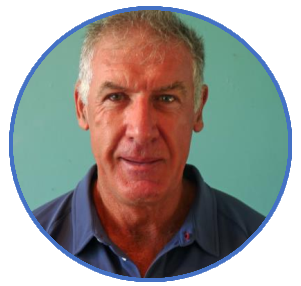
Adam Smith
General Member, QLD
Dr. Adam Smith is a dedicated scientist, manager and leader who has a lifelong commitment to the marine environment and a vision to make a positive difference for current and future generations. Adam is the Chief Executive Officer of Reef Ecologic and an Adjunct Associate Professor with James Cook University. Adam has over 30 years of experience and has initiated, collaborated and delivered many innovative and important ecological, social and community projects involving tourism, fisheries, ports, Defence and research in the Great Barrier Reef, Pacific and the world.
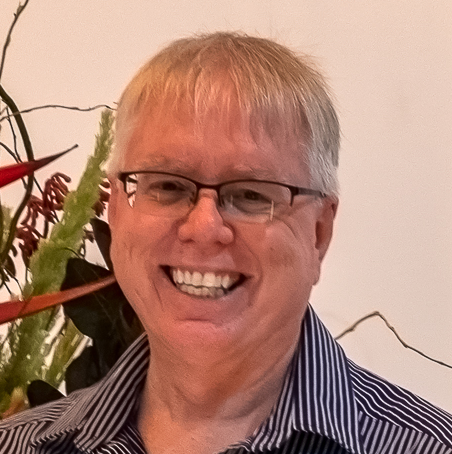
Darryl Ebenezer
General Member, QLD
Darryl is the current CEO of Queensland Water and Land Carers Inc. In this role, he has been able to contribute to and support the activities of many citizen scientists and groups across Queensland and Australia.
He is very much a facilitator and enabler and has worked within community environmental groups and assisted with many practical citizen science activities, both on the ground and online. He currently works with more than 500 volunteer groups across Queensland assisting with good governance, risk and insurance, human resourcing, volunteer management and advocacy.
He was ACSA Treasurer until 2025.
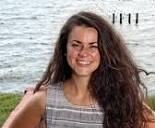
Abi Hils
General Member, ACT
A marine ecologist by training, Abigail spent several years in research and academia logging bottom time exploring new coral reefs, trudging through mangroves and rainforest identifying birds, and scavenging for insects in the prairies of Ohio. Over the last decade, she developed engaging K-20 environmental education programs, facilitated professional development training for high school to postdoc students, and collaborated with government agencies to enhance the quality and scope of their science education. Abigail earned her M.A. in environmental sciences and a B.Phil. in interdisciplinary studies from Miami University (OH).
Abi is passionate about building scientific literacy and empowering individuals to engage with global research and policy issues.

Sunny Sanderson
General Member – International Coordinator, QLD
Sunny strongly believes in taking a holistic approach to complex conservation challenges, equally valuing environmental and social sustainability. Her experience spans both terrestrial and marine systems; she is currently a Research Fellow, utilising a One Health approach to investigate the connections between agricultural land-use change and zoonotic malaria in Indonesia. Previously, she served as Director of Environmental & Social Sustainability at Kelp Blue, and earlier worked at SparkLab in the Queensland Museum, where she used science to communicate the wonder of the world around us.
She holds a Doctorate in political ecology and human geography, as well as a research master’s in ecology. Her
research includes evaluating the socioeconomic and livelihood impacts of African Swine Fever in the Philippines, conducting remote field-based studies on gibbons and orangutans in Borneo, and analysing how large-scale oil-palm development affects rural livelihoods in Malaysia.
Sunny is a strong advocate for strengthening local communities’ connection to the environment through
collaborations that promote citizen science, support healthy people and resilient ecosystems.
ACSA Patron
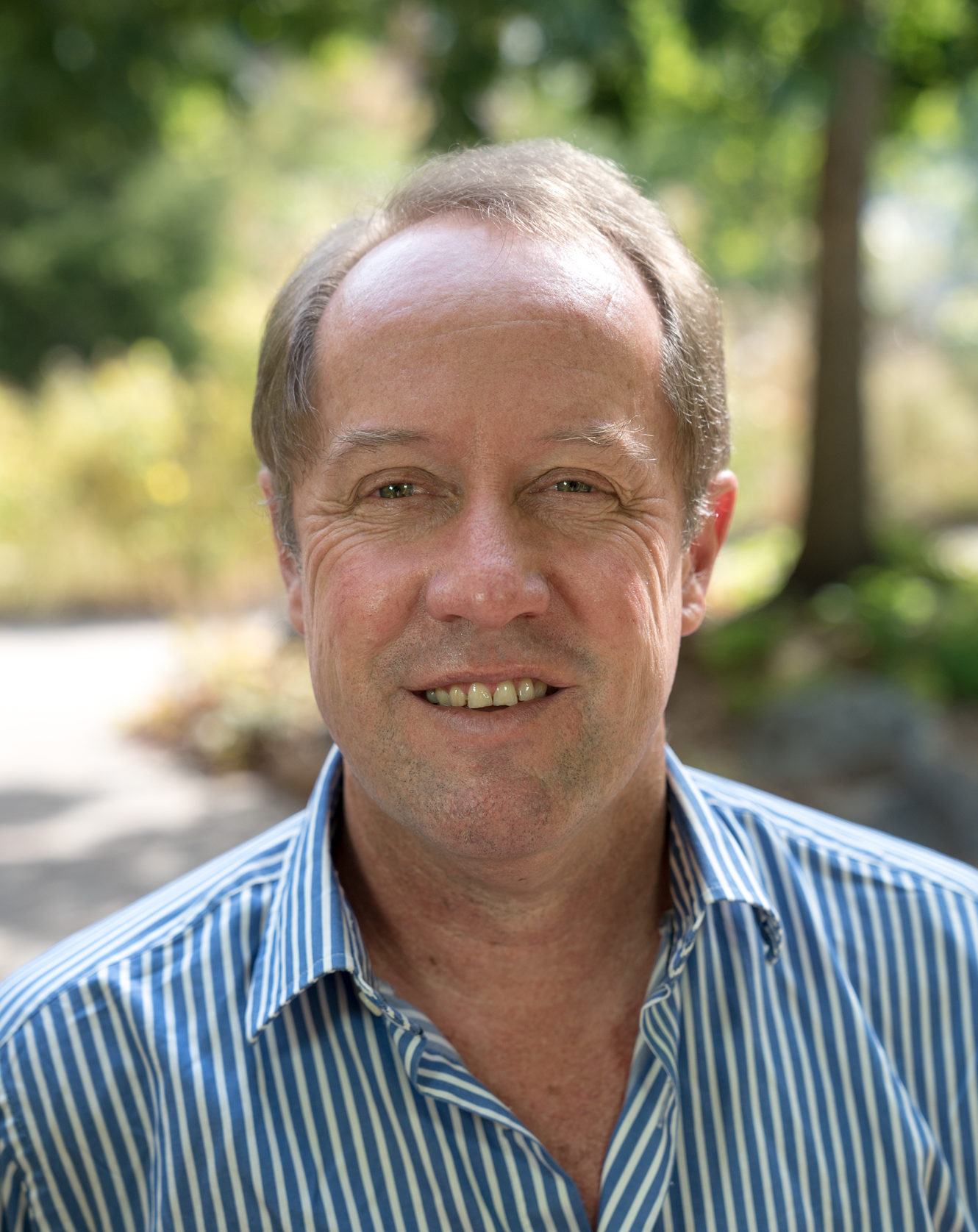
Professor Hugh Possingham
ACSA Patron
Hugh served as the Queensland Chief Scientist between 2020 to 2022. He is a conservation scientist and mathematician who has held a myriad of advisory roles to environmental NGOs (internationally and nationally), governments of all levels, and universities. Hugh is currently a board member for Birdlife Australia. His most significant contribution to conservation was the co-development of the spatial planning software Marxan. It was first used to rezone the Great Barrier Reef, and is now used in almost every country in the world to inform the expansion of marine and terrestrial protected area systems.
Hugh is a huge advocate for citizen science. He asserts that when people are involved in discovery through citizen science they are empowered to advocate for positive action. In his recent citizen science article in The Griffith Review, he wrote,
The power of citizen science to remake or reimagine the world lies in the opportunities it gives to everyone involved – opportunities to learn about the world, to pose questions about how we affect the world and to consider how any change can make a difference. Furthermore, being engaged in citizen science provides people with the confidence to speak out about matters they care about and to question policies or decisions with which they disagree.
You may also like to read a blog he wrote about citizen science and birdwatching. Hugh clearly understands citizen science and appreciates the extraordinary value it adds to scientific research and participatory democracy. We look forward to working with Hugh to raise the profile of ACSA and citizen science across society.
Additional Appointed ACSA Volunteers
ACSA’s History
The Australian Citizen Science Association (ACSA) was conceived at the Inaugural Citizen Science Workshop hosted by the Queensland Museum in Brisbane on 6 May, 2014. A large number of dedicated volunteers came together and formed working groups to actively develop the structure of ACSA and build awareness of Australian citizen science both nationally and globally.
Inaugural Citizen Science Workshop
Attendees gathered at the Queensland Museum in support of the development of the CSNA on May 6th.***Please note that as of March 2015, the name of the Citizen Science Network Australia (CSNA) was changed to the Australian Citizen Science Association (ACSA), though the next below remains as originally written***
Workshop summary documents have been finalized by each of the Citizen Science Network Australia (CSNA) working groups and are available for download at the respective links:
On 6 May 2014, 90 attendees gathered at the Queensland Museum in Brisbane to support the development of the Citizen Science Network Australia.
There was overwhelming agreement amongst the workshop participants regarding the formation of a national association/network to progress citizen science within Australia. Many new friendships were made during the breakfast networking session.
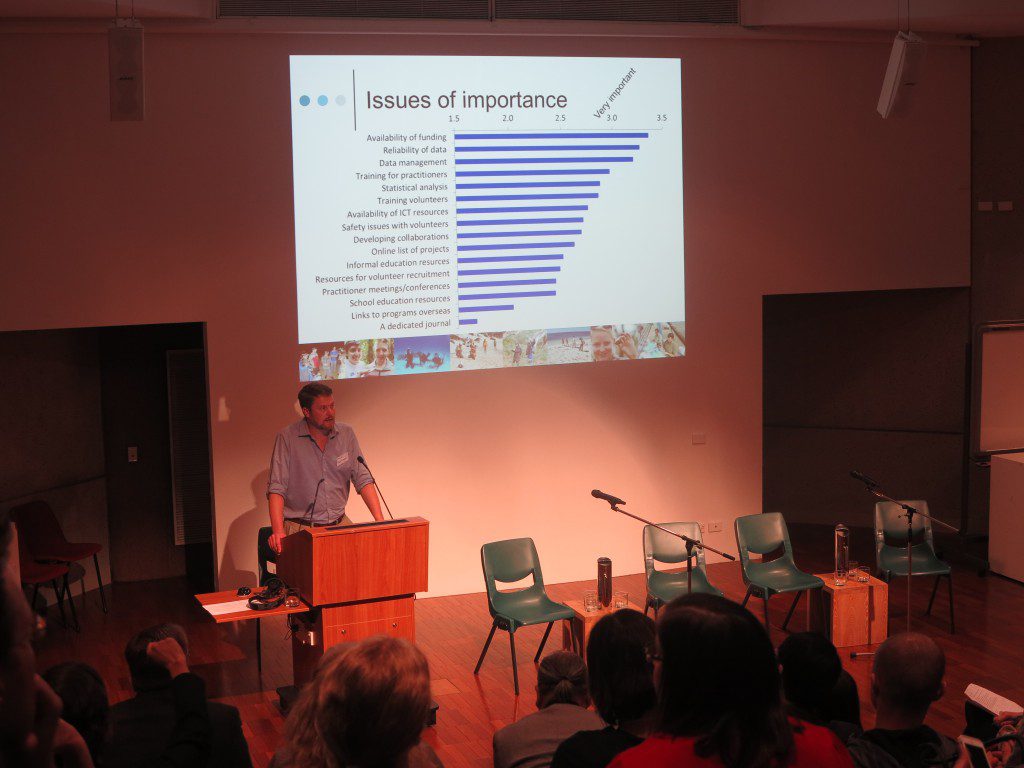
Left – Philip Roetman presents the results of the Australian citizen science survey to an audience of citizen science stakeholders.
The entire morning session was filmed (with the exception of Libby Hepburn) and is available for viewing via the links provided below:
- Citizen Science Overview – Suzanne Miller, Chris Gillies, Philip Roetman
- U.S. Citizen Science Association Overview – Abe Miller-Rushing, Jennifer Lynn Shirk
- Panel 1 – Jayne Keane (facilitator), Angela Dean, Bob Edgar, Janet Dudley and James O’Connor
- Panel 2 – Jayne Keane (facilitator), Simon France, David McInnes, Noleen Brown, Piers Higgs and Peter Doherty
- Panel Q&A – All Panellists
Lots of enthusiastic discussion occurred during the two afternoon breakout sessions which focused on defining the: (1) purpose and (2) form of the Citizen Science Network Australia. Participants were split into nine groups of ten and were asked to summarise their thoughts on vision, mission, membership, entity, governance and communication. The majority of participants supported an Australian association similar in structure to the US association. Each group presented their discussions back to all workshop participants in a facilitated manner and these summaries were reviewed and synthesised for common themes amongst groups.
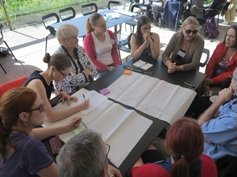
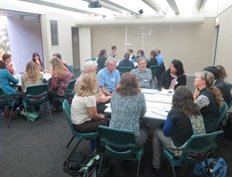
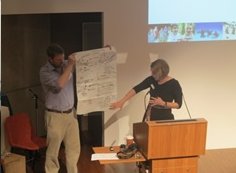
Above – Workshop attendees had the opportunity to discuss the purpose and form of the CSNA in small groups and then present their ideas back to the larger group during afternoon sessions.
Those in attendance were invited to sign up for one or more temporary working groups which will formalise the outcomes of the workshop through summary documents (including scope for further public consolation). These four working groups are (1) entity and governance, (2) charter and objectives, (3) CSNA funding and (4) communications.
The summary documents that were produced by each of these working groups are available via the links at the top of this page.
In June 2014 an establishment committee was formed and was responsible for a number of tasks such as the selection of a host institution, progressing incorporation and coordinating the development of relevant organisational plans. In July 2015 formal elections were held for management committee positions. Under the 2015 Management Committee’s guidance, ACSA officially became incorporated on 30 June 2016. The management committee released its inaugural strategic plan in 2016 and secured seed funding from Inspiring Australia.
ACSA’s Management Committee History
Many people contributed to the shaping and formation of ACSA. We acknowledge all those who contributed at the inaugural workshop in Brisbane in 2014 and the subsequently formed working groups to shape the association prior to incorporation. We also acknowledge all who have served on the management committee and volunteered in various capacities.
Emeritus Management Committee Members
Philip Roetman (2015-2016)
Carla Sbrocchi (2015-2016)
Erin Roger (Chair 2015-2021)
Stephanie von Gavel (2015-2022)
Paul Flemons (2015-2019)
Libby Hepburn (2015)
Jessie Oliver (2015-2017)
Ellie Downing (2016-2018)
Sunny Sanderson (2019)
Alexis Tindall (2017-2018)
Jennifer Loder (2017-2021)
Kylie Andrews (2016-2017)
Michelle Neil (2017-2018)
Rosemary Race (2018-2020)
Patrick Tegart (2019-2020)
Rosalinde Brinkman (2019-2021)
Alysoun Boyle (2020-2021)
Peter Runcie (2020-2022)
Bill Flynn (2020-2022)
Leigh Stitz (2021-2022)
James Chong (2021-2023)
Cobi Calyx (2020-2021)
Maxine Newlands (2020-2021)
Supporting
Geoff Garrett (Patron 2018-2021)
Michelle Neil (2015 – present)
Libby Hepburn (2017- 2023)
Alice Motion (2018 – present)
John Pring (2018-2021)
Kade Mills (2018-2021)
Katie Irvine (2017-2020)
Janine Bedros (2020-2022)
Erin Roger (2023-present)
Jennifer Loder (2021 – present)
Matthew Grace (2023 – present)
ACSA’s Regional Chapters
ACSA Chapters operate under the overarching ACSA governance framework to support the values, approach and strategy of ACSA, and seek to foster an inclusive, inspiring and collaborative citizen science community in Australia. The purpose of ACSA Chapters is to help implement ACSA’s Strategic Goals, priorities and actions at a regional scale. ACSA Chapters help to build awareness of ACSA and citizen science in their local membership and areas of interest and have the opportunity to provide a local voice, representation and communication channel at the national level.
ACSA Working Groups
Working Groups help to implement ACSA’s strategic goals, priorities and actions. Working Groups are centered around a specific area of interest focus, whether that be a particular citizen science typology, citizen science issue or community of practice. Participating in a working group is an excellent way for members to help shape the future of citizen science practice.
ACSA may periodically put a call out for the formation of Working Groups via our website, newsletter and social media. Alternatively, groups of individuals who are interested in establishing a Working Group are encouraged to apply. For all the information, including the application process, please download our Protocols and Application Template.
If you have questions about a Working Group please contact us.
ACSA Annual Reports
2025
2024
2023
2022
- ACSA Annual Report 2021-2022
- ACSA Annual General Meeting Agenda & Minutes (held on 21 Nov 2022 via Zoom)
2021
- ACSA Annual Report 2020-2021
- ACSA Annual General Meeting Agenda & Minutes (held on 29 Oct 2021 via Zoom)
2020
- ACSA Annual Report 2019-2020
- ACSA Annual General Meeting Agenda & Minutes (held on 23 Nov 2020 via Zoom)
2019
- ACSA Annual Report 2018-19
- ACSA Annual General Meeting Agenda & Minutes (held on 11 Nov 2019 in Sydney, Australia)
2018
- ACSA Annual Report 2017-2018
- ACSA Annual General Meeting Agenda & Minutes (held on 15 Nov 2018 in Sydney, Australia)
2017
- ACSA Annual Report 2016-2017
- ACSA Annual General Meeting Agenda & Minutes (held on 14 Nov 2017 in Sydney, Australia)
2016
- ACSA Annual Report 2015-2016
- ACSA Annual General Meeting Agenda & Minutes (held on 22 Nov 2016 in Sydney, Australia)
ACSA Plans and Policies
- ACSA Strategic Plan 2025-2027
- ACSA Strategic Plan 2022-2024
- ACSA Strategic Plan 2019-2021
- Review: 2015-2018 Strategic Plan
- ACSA Constitution (updated 2021)
- ACSA Management Committee – Terms of Reference
- ACSA Communication Strategy (available upon request)
- Terms and Conditions
- Privacy Policy
- Shipping and Delivery Policy
- Refund Policy
- Also, see the ACSA Resources page
ACSA Plans and Policies
- ACSA Strategic Plan 2025-2027
- ACSA Strategic Plan 2022-2024
- ACSA Strategic Plan 2019-2021
- Review: 2015-2018 Strategic Plan
- ACSA Constitution (updated 2021)
- ACSA Management Committee Terms of Reference
- ACSA Communication Strategy (available upon request)
- Terms and Conditions
- Privacy Policy
- Shipping and Delivery Policy
- Refund Policy
- Also, see the ACSA Resources page